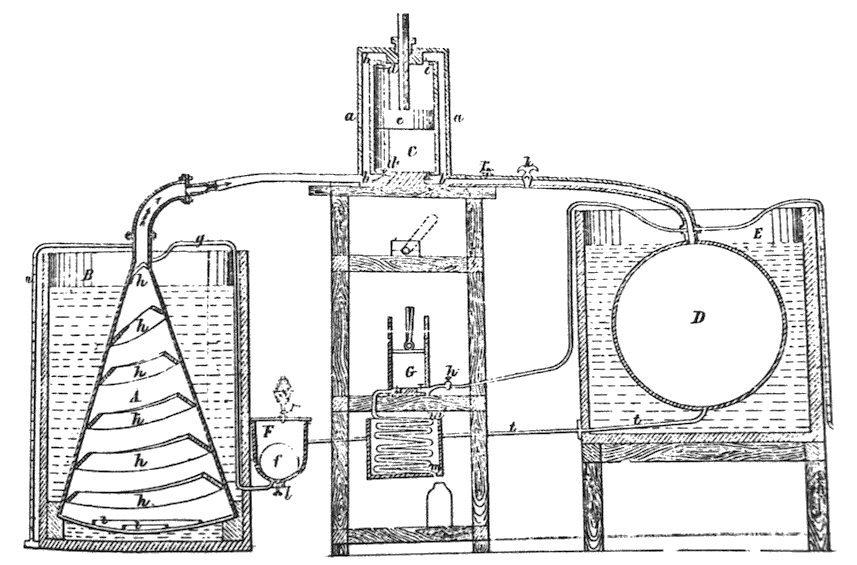
 Drawing: James Harrison's original Machine |
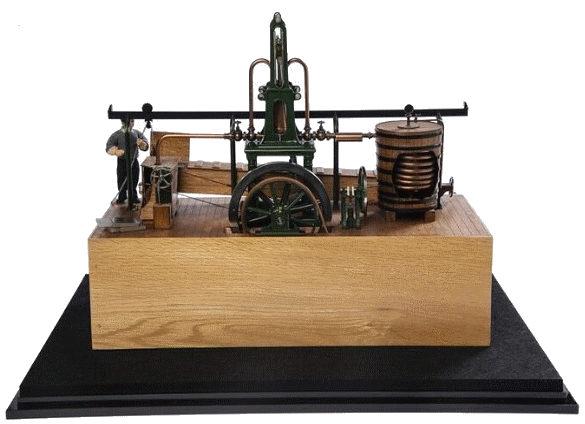 1:10 scale working model of James Harrison's 1857 ether vapour-compression Ice Machine. This model Built by Warwick Bryce: - Model Maker: Engineer is demonstrated at the Geelong Showgrounds Museum. |
|
James Harrison’s cooling process breakthrough in the 1850s was the creation of the world’s first practical ether vapour-compression refrigeration system. Harrison’s key was creating a continuous, hermetically sealed cycle (closed loop System) so the ether could be reused indefinitely, without evaporating into the air. This is the exact same system all modern refrigerators, air conditioners, and industrial freezers, still operate on, the same core thermodynamic principles he pioneered. The process consists of four main stages:1. Evaporation (Heat Absorption & Cooling)• Liquid ether is contained in airtight coils surrounded by water or liquid brine inside an insulated tank. • Under low pressure, ether boils and vaporizes at a very low temperature. • To evaporate, it absorbs heat from its immediate surroundings, lowering the surrounding temperature enough to freeze water into ice or chill air. 2. Compression • A piston compressor sucks the expanded ether vapour out of the evaporator coils. • The piston mechanically compresses the gas, driving up both its pressure and temperature. 3. Condensation (Heat Rejection) • The high-pressure, hot ether vapour is forced into a condenser coil cooled by external water (often drawn from a river or well). • As the water cools the compressed gas, the ether rejects its heat and condenses back into a liquid state. 4. Expansion & Recirculation • The liquid ether passes through a self-regulating valve back into the low-pressure evaporating chamber. • The sudden drop in pressure enables the liquid Ether to boil again, restarting the cycle. Why It Changed the World • Prior to Harrison’s machine, ice had to be harvested naturally from frozen lakes in winter and stored in icehouses. His 1855 patented machine could produce tons of ice per day on demand, regardless of ambient weather. • Industrial Utility: Breweries were among the first major commercial adopters, using Harrison's machines to control fermentation temperatures year-round. • Global Food Chain: Harrison's work demonstrated that meat and produce could be safely preserved for storage and long-distance export. This laid the groundwork for facilities like the Murtoa Wimmera Inland Freezer Works, which used his compression technology (transitioning from ether to ammonia) to freeze over a million carcasses for export annually. |